
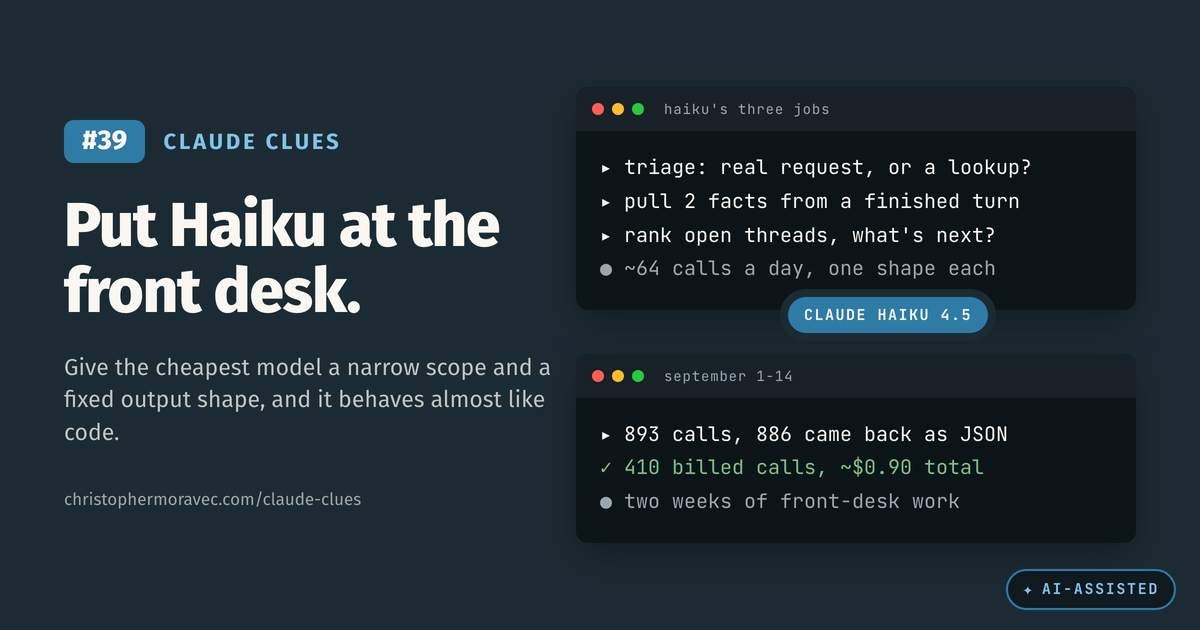
🗂️ Over two weeks in September, my agent made 893 model calls to the cheapest Anthropic model.
Claude Haiku 4.5 is Anthropic's smallest, cheapest, fastest model. It's not as capable as the bigger models, but it's very good at short deterministic work. It can often behave like deterministic code, but with a little brainpower behind it. So I use it to sort incoming work, check whether the bigger model actually answered the original question, or pick a to-do list from a list of potential actions.
Jaws calls Haiku about 64 times a day to do three different things. First, it decides whether an incoming request is real or something deterministic code can answer (like what the temperature is). The second use case reads a finished conversation turn after a bigger model returns and extracts two pieces of information worth recording in the system's notes: things or facts it needs to remember. The third case looks at all the open conversations I have in Jaws and ranks what deserves attention next, so a background process can proactively pick things up that might otherwise be left open. Haiku can identify these very cheaply, even though it can't do the work.
Claude Code can do this too, using the /goal command we talked about back in Clue #37. Haiku is the judge there by default, but you can change the judge model. I think Haiku is pretty good at judging output as long as the answer is narrow and easy to identify in the final response. If it was a big, complex request, it can struggle.
Thanks to Tim Rawson for the tip. Drafted with Claude from my voice notes, edited by me.